Sample Page

Preventing Model Drift: Continuous Learning Frameworks for Autonomous AI Agents

Introduction

AI agents are designed to adapt and evolve, which means their ability to keep learning is central to how well they perform. Whether they’re organizing workflows or helping manage customer communications, their usefulness depends heavily on how they pick up new patterns over time. When that learning slows down or stops completely, it can create delays, reduce accuracy, or even lead to incorrect decisions. That’s a problem no one wants to face, especially if the autonomous AI agent plays a key role in day-to-day operations.

When AI agents stop learning new patterns, it’s not always obvious right away. Some changes are gradual, creeping into the system as training data grows stale or tasks shift in complexity. If left alone, these issues can produce major performance gaps. But the good news is there are ways to spot what’s going wrong and take the right steps to fix it. Before anything can improve, it starts with recognizing the signs.

Identifying the Symptoms of Stalled Learning

One of the first signs something’s off is when an AI agent starts repeating the same responses, even when the inputs change. You may also notice it relying too heavily on outdated patterns or making choices that don’t reflect recent feedback. These are small clues, but they tend to snowball into bigger issues.

Here are a few red flags that can point to a stalled learning process:

  • Model predictions become less accurate or start drifting from real-world outcomes
  • Interaction logs show repeated outputs despite varied prompts
  • The AI ignores updated data or recent user behavior
  • It resists adjusting strategies or workflows after feedback is provided
  • You consistently have to override or manually update results

Most of these issues are easy to miss if you’re not actively keeping an eye on performance analytics. That’s why regular check-ins are helpful. Monitoring metrics like error rates, training frequency, and output variety can act like a diet log—it shows you what’s working and what’s missing.

For example, imagine an AI agent that once auto-scheduled appointments based on user habits. Over time, as those habits change, like shifting work-from-home schedules or seasonal differences, it no longer keeps up, and appointments get booked at odd hours. If the agent isn’t adjusting, it’s likely not learning from evolving input data.

Catching these symptoms early helps limit disruption. The next step is to peel back the layers and figure out what’s causing the stall to begin with.

Understanding Why Learning Stops in AI Agents

Identifying the cause of stalled learning starts with checking the agent’s setup. Most of the time, it goes back to the data. Either it’s missing, outdated, or doesn’t reflect the right environment anymore. But there could also be technical reasons behind it, like training routines falling off track or communication breakdowns between connected models.

Here are a few of the most common causes:

  • Old training datasets that no longer match current input types or user needs
  • Lack of diverse data, which limits an agent’s ability to adapt to new behavior
  • Algorithm limits that cap the model’s ability to grow beyond its original task
  • Broken or incomplete feedback loops that stop learning signals from reaching the model
  • Environmental changes, such as new system integrations or platform shifts that disrupt data flow

Another key reason learning stalls is when agents operate in isolation. Without sharing updated insights across agent networks, they miss chances to expand their understanding from peer activity. Over time, this leads to inconsistency and a static view of how to respond to tasks or users.

Once you’ve pinpointed what’s blocking learning, the next move is to apply the right fix. And that starts with a solid strategy to reset and refresh the agent’s learning path.

Strategies to Reignite Learning in AI Agents

Once you’ve figured out what’s holding your AI agent back, the next move is giving it a fresh path forward. This usually means rebooting the learning system from the inside out. Sometimes, it’s a matter of swapping in fresh data. Other times, it’s about fixing how signals and feedback get processed. Either way, the goal is to restore active learning and help the agent keep up with changing demands.

Start with the training data. It might sound basic, but stale data is one of the biggest reasons agents get stuck. Update it with current examples and more varied scenarios. If your agents have been running on the same batch for too long, chances are they’re missing shifts in user behavior or new market patterns.

From there, move into model tuning. Autonomous AI agents aren’t just set-it-and-forget-it machines. They need routine model evaluations to troubleshoot blind spots in how they process inputs or make predictions. In many cases, even small recalibrations, like adjusting the weight of certain decision pathways, can make a big difference.

Now is also a smart time to explore communication between agents. When they can share insights with each other, there’s a greater chance they’ll learn new things faster. One agent might pick up on a subtle user trend that others haven’t. If they’re connected through a channel that allows for insight transfer, all linked agents can grow together, rather than figure things out in isolation.

Running regular performance reviews is another piece of the puzzle. These give you a snapshot of what’s working and where things start slipping. Keeping tabs on prediction accuracy, output quality, and learning rate helps keep your system on the right track. What you’re really aiming for is an agent that adapts quickly, not one that’s just reliable for now but falls behind later.

Future-Proofing Autonomous AI Agents for Long-Term Performance

Resetting learning is step one, but what keeps things running smoothly over time is what you put in place after that. You need a rhythm. A pattern of regular updates, smart feedback, and environmental checks that allow your agent to grow with your goals—not apart from them.

Here’s a practical way to help future-proof growth:

  • Build a feedback loop where the agent receives reviews from real user sessions, not just test environments
  • Train it with a mix of new data and uncommon edge cases to broaden handling over time
  • Enable flexible scheduling for model checks and recalibrations so your agent doesn’t operate on outdated assumptions
  • Connect your agents to a collaborative system where they can share performance strategies and adjustments
  • Choose adaptive algorithms that allow patterns to shift dynamically, not just by manual rewrite

That last point is bigger than it seems. Adaptive systems help prevent the same stagnant behaviors from returning later. Rather than reacting slowly to all changes, an adaptive agent can respond automatically and often without needing a full rebuild.

As environments evolve—customer needs, digital channels, or input trends—having agents that roll with those changes matters. If your AI system can run like a team that shares ideas and updates itself without constant babysitting, you’re already ahead of the curve.

Keeping Learning on Track

AI agents are made to get smarter. When they stop doing that, you’re no longer getting their full value. The good news is it doesn’t take a full reset to fix the problem. With the right kind of updates, fresh evaluation cycles, and better network communication, agents can get back on track fast and stay there.

Of course, this isn’t the kind of thing you want to keep fixing over and over. That’s why consistent improvements are so helpful. Whether it’s through better training material, smarter algorithm choices, or tools that support long-term growth, what matters most is planning for learning that never plateaus. You want your agents to keep improving, adapting, and delivering smarter results each day without needing a reminder to do it.
To keep your autonomous AI agent learning and growing, explore how our solutions can make a difference. At Synergetics.ai, we know staying ahead matters. Discover how our innovative tools can help streamline your AI management processes by incorporating the right approach to an autonomous AI agent.

Frank Betz, DBA, an accomplished professional at Synergetics.ai (www.synergetics.ai), is a driving force in guiding industry, government, and educational organizations toward unlocking the full potential of generative and agentic AI technology. With his strategic insights and thought leadership, he empowers organizations to leverage AI for unparalleled innovation, enhanced efficiency, and a distinct competitive advantage.

Protecting AI Agents from Hacking Threats: A Zero Trust Security Framework for Enterprises 

Introduction

In 2025, weaponized AI attacks have significantly impacted enterprises, with costs averaging $2.6 million per breach. Despite these rising threats, many organizations still lack robust adversarial training protocols. The stakes are high: AI agents now automate critical operations in finance, healthcare, and customer service, making their compromise a direct risk to data privacy, regulatory compliance, and business continuity. This article explores how enterprises can protect their AI agents by adopting a Zero Trust security framework, guided by the NIST AI Risk Management Framework (AI RMF), and integrating advanced runtime encryption and ethical governance. Unlike traditional cybersecurity, defending AI systems requires specialized strategies that address unique threats such as data poisoning and model inversion, while embedding governance, risk, and compliance (GRC) at the architectural level.

The AI-Specific Threat Landscape

AI agents present a distinct set of vulnerabilities compared to conventional software. Data poisoning attacks, for example, manipulate training datasets to skew AI outputs—financial institutions have reported biased trading decisions traced back to corrupted data. Model inversion attacks allow adversaries to reverse-engineer proprietary algorithms by systematically querying APIs, as demonstrated in a recent breach at a European bank’s loan-approval AI. Prompt leakage is another growing concern, highlighted by the Samsung incident where proprietary code was inadvertently exposed through third-party tools. To counter these risks, enterprises are turning to runtime monitoring solutions like LangTest, which continuously measure AI “intended behavior” and “accuracy” to detect anomalies in real time.

Implementing Zero Trust Architecture for AI

Zero Trust security eliminates implicit trust within AI workflows, relying on three core mechanisms:

  • Microsegmentation: AI agents are isolated in secure enclaves, such as AgentVM containers, to prevent lateral movement if a breach occurs. For example, healthcare AI systems that process patient data operate within AgentVM sandboxes, and all inter-container communication is authenticated using digital certificates.
  • Encrypted Data Pipelines: Data is protected both in transit and at rest using AES-256 encryption. Tools like AgentTalk anonymize personally identifiable information (PII) with business-specific protocols before audits. Solutions such as Palo Alto Networks’ Cortex XSIAM leverage inline encryption to accelerate threat response.
  • Least-Privilege Access: Permissions are tightly bound to user roles via identity providers like Azure AD or Okta, with multi-factor authentication required for model access. This approach drastically reduces the risk of unauthorized entry.

Aligning with the NIST AI Risk Management Framework

Adhering to the NIST AI RMF ensures a systematic approach to AI risk mitigation across three key domains:

  • Govern: Establish AI review boards to audit model behavior quarterly and assign accountability for issues like drift or bias. At JPMorgan Chase, these boards enforce ethical AI charters with clear penalty clauses for non-compliance.
  • Map: Catalog all agent-data interactions, automatically encrypting sensitive datasets using metadata tags.
  • Measure: Integrate runtime anomaly detection platforms such as Darktrace DETECT to flag data exfiltration or performance drops. Microsoft’s Responsible AI dashboard is a leading example, generating compliance reports that align with regulatory standards.

Securing the AI Development Lifecycle

Security must be embedded from the earliest stages of AI development:

  • Adversarial Training: Agents are stress-tested with poisoned inputs. For instance, Goldman Sachs subjects its financial AI models to monthly “red team” attacks that simulate market manipulation.
  • Retrieval-Augmented Generation: These systems include real-time plagiarism checks to block copyright violations during knowledge retrieval.
  • Air-Gapped Deployments: In highly regulated sectors, air-gapped private cloud deployments prevent cross-tenant exploits. Lockheed Martin, for example, runs its defense-contract AI on dedicated AWS GovCloud instances.
  • Post-Deployment Validation: Tools like LangTrain perform multi-step fine-tuning to validate resilience against emerging threats, with version control tracking all model iterations.

Conclusion

Securing enterprise AI requires a multi-layered approach: Zero Trust segmentation, NIST RMF-aligned governance, and continuous adversarial testing. These strategies not only reduce breach risks but also ensure regulatory compliance. Synergetics.ai’s AI HealthCheck service offers real-time monitoring for threat detection, bias mitigation, and compliance tracking, helping organizations stay ahead of evolving risks. Looking forward, future-proof AI architectures will incorporate advanced techniques like homomorphic encryption, enabling secure inference without exposing sensitive data.

Safeguarding AI systems is essential for maintaining secure and reliable business operations. For organizations seeking to strengthen their defenses, partnering with trusted AI service providers like Synergetics.ai can make a significant difference—enabling innovation while minimizing risk, and empowering you to build confidently for the future.

Frank Betz, DBA, an accomplished professional at Synergetics.ai (www.synergetics.ai), is a driving force in guiding industry, government, and educational organizations toward unlocking the full potential of generative and agentic AI technology. With his strategic insights and thought leadership, he empowers organizations to leverage AI for unparalleled innovation, enhanced efficiency, and a distinct competitive advantage.

Solving AI Agent Errors for Better Performance

Introduction

AI agents, as described in a 2023 Gartner report, are designed to process data, make decisions, and carry out tasks autonomously. As an AI solutions architect with over a decade of experience, I’ve seen firsthand how these systems transform industries. They can sort through large volumes of information quickly and deliver actions based on learned patterns. When they work well, they save time, reduce delays, and help systems feel seamless to users. But what happens when they get it wrong?

Incorrect responses from artificial intelligence agents can throw everything off. For example, in a recent deployment at a retail client, our AI agent mistakenly recommended winter coats in July due to outdated seasonal data—highlighting the importance of regular dataset updates. These issues do more than hurt efficiency. They interfere with trust, cause delays, and leave both customers and staff frustrated. Misfires can be tricky to catch, especially when AI processes are connected across platforms. Fixing them starts by understanding why they happen and how to trace the problem. Have you ever experienced an AI system making a puzzling mistake? Share your story in the comments below!

Exploring Common Causes of Incorrect Responses

When artificial intelligence agents respond with incorrect or faulty data, there’s usually an underlying reason. These root causes tend to fall into a few categories that pop up across most enterprise platforms.

1. Low-quality or biased training data

AI agents depend heavily on the data used to train them. If that data is outdated, poorly formatted, or overly focused on certain topics or groups, the agent is going to reflect those gaps. For instance, if an HR agent is trained mostly on technical job listings, it won’t respond well to creative role inquiries. The result is a mismatch between input and output that undermines the system’s purpose.

2. Software errors

Bugs and glitches within the AI’s code can easily cause mistakes. Logic errors, unintended consequences of updates, or just missed steps in the flow can cause the system to act unpredictably. Even subtle shifts can lead down very different paths when artificial intelligence is involved.

3. Agent communication breakdowns

Many systems now rely on multiple agents working together across processes. But if communication protocols are misaligned, vital messages may get lost or misunderstood. One agent may expect a type of input the other doesn’t send, creating confusion and wrong answers.

Understanding where these breakdowns happen—whether it’s the data, the code, or the messages—is the first step in getting cleaner and more consistent results from AI agents.

How to Diagnose and Fix Common AI Agent Errors

If an AI agent isn’t acting right, diagnosing the issue starts with careful observation and focused testing. Jumping straight to fixes without digging into the cause can lead to new problems down the line. Instead, use these steps to isolate the issue:

1. Spot inconsistencies

Start by tracking when mistakes happen. Do they follow a pattern? Are certain types of inputs or requests giving wrong responses more often than others? Sometimes issues only show up after specific updates or system changes. Noting these patterns can point toward where to look first.

2. Run small tests

Start with single-variable changes. Whether it’s a minor input tweak or isolating a specific function of the system, small batch testing can tell you which part of the process is causing trouble. Test different paths and compare outcomes to see where things are breaking down.

3. Review logs

Checking communication and system logs is one of the best ways to understand what’s really happening behind the scenes. These logs may show that an agent never received a message, misinterpreted a command, or missed a necessary execution step. For systems that rely on multiple AI agents, this review can be particularly helpful.

By following these AI troubleshooting steps, you’ll quickly identify the root cause of AI agent errors and implement effective solutions for improved accuracy.

Solutions to Improve AI Agent Accuracy

After finding the root cause, it’s time to make improvements that enhance how agents operate. These tweaks don’t have to be extreme or expensive. Many of them involve tuning the key areas that shape how artificial intelligence agents behave.

Start by updating your data

Data is the backbone of an AI agent. But outdated, incomplete, or biased data limits its potential. Take time to refresh your datasets using information that matches today’s real-world environments. Include a wide range of examples so the agent can interact more confidently and avoid gaps in understanding.

Tighten up your tests

Your test setup should include both normal use cases and edge cases. These less common scenarios help you understand how AI agents respond when things aren’t perfect. Test validation should also be repeated occasionally to keep agents responsive to any new patterns or rules introduced over time.

Improve communication across agents

If your system depends on multiple agents passing data between one another, make sure their interactions follow shared rules and speak the same language. Small differences in communication logic can derail entire processes. Making your communication protocols more aligned lowers the risk of missed steps and conflicting outputs.

These small but important improvements can greatly increase the accuracy and reliability of your AI agents, keeping your operations running smoothly no matter the scale.

Preventative Measures for Future Reliability

Once artificial intelligence agents return to stable operations, it’s smart to shift from fixing mode into prevention. These practices help limit future issues and keep systems ready to grow and adapt.

1. Monitor performance regularly

Don’t wait for a problem to take action. Use live safeguards that track how agents respond, catch unusual patterns early, and alert your team about potential trouble. The sooner you find a symptom, the easier the fix.

2. Keep your training data fresh

Avoid setting and forgetting your data sets. Business needs evolve, and so should your AI models. Refresh training data on a rotating schedule based on factors like product updates, customer feedback, and user behavior trends.

3. Enable feedback loops

A system that learns from its successes and stumbles grows stronger over time. Logging and reviewing agent responses—especially mistakes—gives guidance for quick, minor updates that improve how the system performs overall.

These practices keep your system aligned with its purpose and make it easier to scale or shift when business needs change. Artificial intelligence agents that learn, adapt, and evolve with you are a long-term asset.

Keep Your AI Agents on Track with Synergetics.ai

Even advanced artificial intelligence agents can hit bumps in the road. When they do, smart diagnostic work combined with clear processes can bring them back on track. But staying on track requires tools that help you observe, test, adjust, and improve regularly. Reliable performance is built not just on setup but on upkeep and adaptability over time.

At Synergetics.ai, we believe that combining advanced AI tools with expert human oversight is the key to reliable, high-performing agents. Our team regularly reviews agent outputs to ensure they align with your business goals and brand values.
Stay ahead of the curve by investing in solutions that enhance how your artificial intelligence agents operate. Synergetics.ai offers platform tools designed to improve performance, boost accuracy, and strengthen dependability across your systems. Explore our pricing options to find the right fit for your business.

Frank Betz, DBA, an accomplished professional at Synergetics.ai (www.synergetics.ai), is a driving force in guiding industry, government, and educational organizations toward unlocking the full potential of generative and agentic AI technology. With his strategic insights and thought leadership, he empowers organizations to leverage AI for unparalleled innovation, enhanced efficiency, and a distinct competitive advantage.

LangTest by Synergetics.ai Now Listed on AITools.inc: A Game-Changer for LLM Evaluation

We are excited to announce that LangTest, the powerful language model testing platform from Synergetics.ai, is now officially listed on AITools.inc — a leading directory of cutting-edge AI tools and platforms. This marks a significant milestone in our mission to provide developers, enterprises, and researchers with a reliable framework to validate the performance, robustness, and safety of their language models.

What is LangTest?

LangTest is an platform designed to help developers systematically evaluate Large Language Models (LLMs). With growing adoption of generative AI and foundation models across industries, the need for structured, repeatable, and transparent testing is more critical than ever. LangTest makes this possible.

Whether you’re fine-tuning a model, integrating it into your product, or preparing it for enterprise deployment, LangTest gives you the confidence that your LLMs are accurate, unbiased, and safe to use.

Key Features

  • Bias & Fairness Testing: Uncover latent biases in your models using configurable test scenarios.
  • Robustness Evaluation: Simulate adversarial inputs to assess how well your model holds up under edge cases.
  • Guardrail Validation: Ensure your model’s responses adhere to safety, content, and tone policies.
  • Customizable Tests: Easily configure test cases to align with your domain, product goals, and use cases.
  • Open Source & Extensible: Integrate LangTest seamlessly into your CI/CD workflows or experiment pipelines.

Why Developers Love It

With LangTest, developers can:

  • Gain granular insights into model behavior across different input types.
  • Validate the impact of prompt tuning or fine-tuning in a quantitative way.
  • Benchmark multiple models with a consistent test suite.
  • Catch unexpected model behaviors early—before they reach your users.

Listed on AITools.inc

We’re proud that LangTest is now part of the curated AITools.inc catalog—a trusted resource for discovering the best tools in AI. This listing not only highlights LangTest’s relevance to the global AI developer community but also makes it easier for organizations to find and integrate responsible testing practices into their LLM development lifecycle.

Try LangTest Today Whether you’re building chatbots, virtual agents, content generation tools, or domain-specific assistants, LangTest empowers you to ship with confidence. Explore more at https://synergetics.ai/platform/langtest and see how easy it is to get started.

Solving AI Agent Communication Barriers by Using Synergetics.ai

Introduction

AI agents are transforming industries by streamlining processes and enhancing decision-making. From healthcare to e-commerce, these agents are designed to analyze data, automate tasks, and improve overall efficiency. However, their true potential is realized when they can communicate effectively with one another. Just like a team works best when its members share information seamlessly, AI agents thrive when they can exchange data smoothly. When AI agents communicate effectively, they can tackle complex problems together, leading to advancements in many areas.

Despite the advantages, AI agents often face challenges in communicating with each other. Many companies struggle with making their AI systems work together due to different communication protocols and standards. This can lead to inefficiencies and missed opportunities. Let’s explore why these issues arise and how businesses can overcome them for a more integrated and effective AI experience.

The Problem With AI Agent Communication

AI agent communication seems as if it should be straightforward, but various technical barriers get in the way. Interoperability issues arise primarily because AI systems are developed independently. They often adhere to diverse protocols and follow varying standards. Imagine trying to have a conversation with someone who speaks a different language; without a common language or translator, the conversation goes nowhere. This analogy effectively highlights that just as humans who speak different languages struggle to communicate, AI agents built on different protocols and standards face similar difficulties. Without a shared communication “language” or a translation mechanism, the agents cannot effectively exchange information, hindering their ability to work together. 

These challenges can significantly impact business operations. For example, in an e-commerce setting, AI agents responsible for inventory management might not synchronize correctly with pricing or shipping systems. This misalignment can lead to incorrect stock levels being shown to customers, which negatively impacts their experience.

Some common obstacles include:

  • Diverse Protocols: AI agents developed by different companies may use unique communication protocols, making it tough for them to “speak” the same language.
  • Varying Standards: There is often no single industry standard for AI communication, resulting in compatibility issues.
  • Data Silos: Information can be trapped in isolated systems, making it hard for AI agents to access and use data efficiently.

These hurdles can disrupt operations, reduce efficiency, and lead to frustrations for both businesses and their clients. Understanding these problems is the first step to overcoming them, which leads us to the next important aspect: addressing the technical barriers.

Addressing Technical Barriers

Overcoming the technical obstacles in AI communication starts with establishing a standardized protocol. Much like how we use a universal language to communicate with people from different countries, AI agents need a common set of guidelines to talk to each other effectively. This standardized protocol can help align the diverse systems and make the communication process smoother.

AgentTalk represents a significant leap forward in solving these interoperability challenges. By offering a common language for AI agents, it simplifies the communication process across various platforms and ecosystems. This not only facilitates smoother interactions but also unlocks a range of opportunities for integration and collaboration. With this approach, companies can ensure their systems work together without the friction that typically comes from differing protocols or standards.

There are various technical solutions that businesses can adopt to enhance interoperability:

  • Utilize Gateways: Use gateways that enable AI agents to translate and understand different protocols.
  • Adopt Open Standards: Embrace open standards for AI development to encourage compatibility across different systems.
  • Implement Middleware: Introduce middleware solutions that act as a bridge between incompatible systems, enabling better communication.

Addressing these technical barriers is a crucial step in making the most of AI capabilities, as it ensures that systems can interact fluidly, leading to more robust outcomes.

Strategies for Implementing an Effective AI Agent Platform

To build a successful AI agent platform, several strategies need to be considered. These strategies not only help in achieving interoperability but also ensure secure and efficient communication among AI systems. Platforms like AgentWizard and AgentMarket are great examples of tools that make it easier to create and deploy AI agents. For companies looking to improve their AI setup, these steps are essential.

    1. Define Clear Standards: Establish a set of standards for AI agents within your network to follow. This creates a uniform approach that ensures all agents can work together seamlessly.
    2. Focus on Security: Implement security measures to protect communication between agents. This involves encrypting data exchanges and ensuring that only authorized agents have access to sensitive information.
    3. Use Comprehensive Tools: Leverage tools and platforms that facilitate better communication. AgentWizard and AgentMarket are good examples of how software solutions can simplify the creation and deployment of AI agents.

    By focusing on these strategies, businesses can create a more integrated AI environment, allowing agents to communicate more effectively and thereby enhancing overall efficiency.

    Embracing a Seamless AI Future

    The world is moving fast, and businesses that fail to adapt their AI systems may miss out on significant opportunities. In a market driven by innovation, addressing these communication challenges can be transformative. By addressing interoperability challenges and adopting best practices, companies set themselves up for growth and innovation.

    A seamless AI ecosystem opens doors for improved efficiency, as systems communicate and collaborate in real-time. This not only boosts productivity but also leads to better customer experiences as businesses can respond more swiftly to market needs.

    Adopting strong solutions for interoperability not only resolves current challenges but also positions a business well for the future. When systems can talk to each other effortlessly, the possibilities for new applications and improvements are endless. In a market that’s hungry for innovation, solving these communication hurdles can be a game changer.

    Elevate your business operations with a cutting-edge AI agent platform that seamlessly integrates diverse systems for enhanced productivity. Explore how Synergetics.ai can transform the way your AI agents communicate and collaborate to create smoother, more efficient workflows across your network.

    Agent Communication: Transforming Industries

    Introduction

    AI agent communication is fundamentally changing how technology interacts, moving beyond isolated islands of automation. Picture a world where different AI systems don’t just coexist—they actively connect and collaborate, not just within a single environment but across multiple, disparate ecosystems. This is the foundation of agent-to-agent communication: AI systems directly interoperate, enabling richer, more effective teamwork and problem-solving across boundaries.

    What Makes Us Unique

    We are the only solution in the market capable of enabling agent-to-agent communication that seamlessly crosses multiple ecosystems. This means our agents can interact with agents from other ecosystems—sometimes several at once—to collectively complete tasks and reach shared goals. This unique ability goes far beyond basic integration or single-ecosystem collaboration.

    Furthermore, agent-to-agent communication is fundamentally different from human language. Rather than relying on human-understandable conversations, our platform facilitates proprietary, encoded exchanges of data, commands, and instructions. These communications may be opaque to humans but are tailored to maximize machine efficiency and coordination. We make this possible through our innovative use of a customizable “Vocabulary,” accommodating any protocol or encoded language that agents require.

    Transforming Industries through Seamless Collaboration

    With agent-to-agent communication, industries are seeing revolutionary improvements:

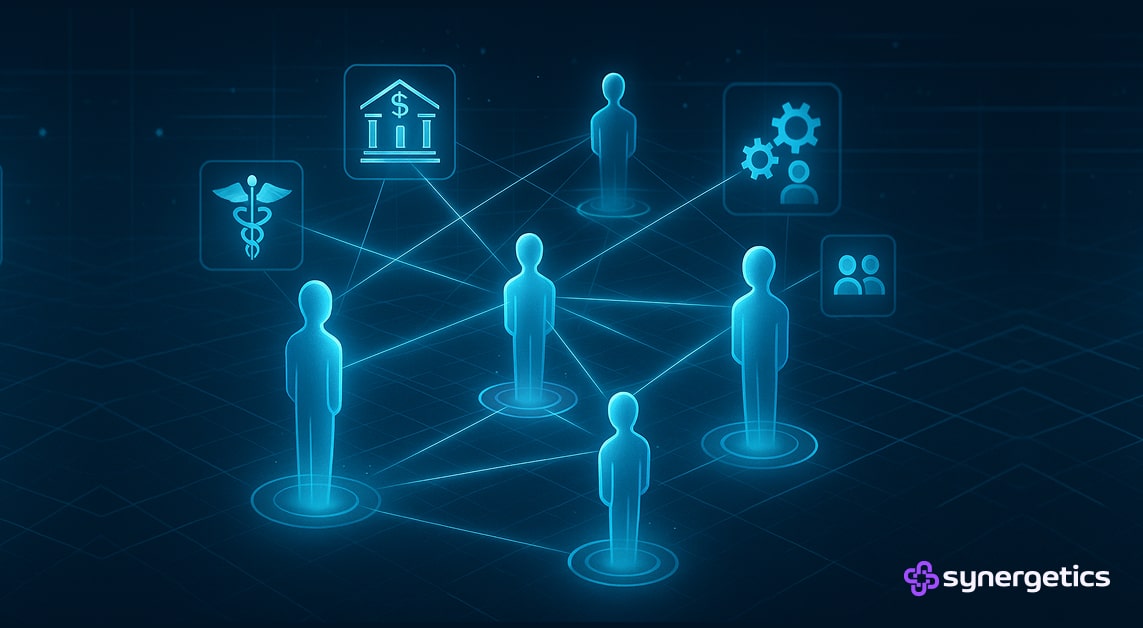
    • Manufacturing: Robots and systems coordinate actions across different production lines, minimizing downtime and adapting to real-time changes—even when equipment spans different vendors’ technology ecosystems.
    • Healthcare: Hospital AI systems managing patient records, diagnostics, and treatment plans now exchange information—regardless of their original provider—facilitating better care and faster response.
    • Finance: Agents detect and prevent fraud by pooling intelligence across diverse transaction monitoring systems, sharing real-time updates to thwart threats that no single system could catch alone.
    • E-commerce: Shopping assistants, recommendation engines, and inventory managers communicate—even if hosted by different e-commerce platforms—ensuring customers find what they want and businesses optimize stock dynamically.
    • Human Resources: Recruitment systems and employee management agents streamline workflows, connecting tools from various HR platforms to improve hiring, onboarding, and performance tracking.

    Why Synergetics.ai Leads the Way

    • True Cross-Ecosystem Interoperability: Agents aren’t confined by ecosystem or vendor. Ours are the only agents who can find, speak to, and collaborate with agents from disparate environments without middleware.
    • Customizable Encoded Communication: Our proprietary Vocabulary system allows agents to “speak” in an optimized, machine-centric way. Communication can be any encoded protocol, not just human language—resulting in faster, more secure, and more precise exchanges.
    • Secure Data Exchange: All agent discussions—regardless of vocabulary—are protected by industry-leading security, maintaining confidentiality and integrity across environments.
    • Easy Deployment & Scalability: Our platform streamlines setup, management, and scaling. Adding new agents or connecting new systems is fast and effortless, thanks to our platform’s tools and intuitive interface.
    • Marketplace Advantage: Synergetics.ai’s agent marketplace enables rapid deployment, trading, and integration of specialized agents, making it simple for businesses to find the right fit.

    What’s Next: A New Era of AI Collaboration

    Agent-to-agent communication isn’t just a feature—it’s a transformation. Businesses can now use AI as true partners, not just tools, dynamically assembling expertise from across the technological landscape. This paradigm shift unlocks new efficiencies, automates complex workflows, and makes entirely new modes of business possible.

    As AI evolves, so will the capacity of agents to cooperate across even more domains and ecosystems. With Synergetics.ai leading the way—enabling secure, truly interoperable, and highly efficient machine-to-machine collaboration—the future promises limitless innovation across every industry. Businesses ready to embrace this change stand to transform operations, create better customer experiences, and pioneer solutions that were previously unimaginable.

    If you’re looking to improve how your systems work together, take a look at how efficient agent-to-agent communications can help streamline workflows and reduce friction across your operations. Synergetics.ai offers tools that make it easier for AI agents to collaborate, so your business can move faster, work smarter, and grow with less hassle.

    Synergetics.ai Joins AI Agent Store: Expanding Horizons for Autonomous AI Agents

    In a significant move to broaden its reach and impact, Synergetics.ai has officially listed its suite of autonomous AI agents on the AI Agent Store, a premier marketplace for AI solutions. This collaboration marks a pivotal step in making Synergetics’ advanced AI offerings more accessible to businesses and developers worldwide.

    What is Synergetics.ai?

    Synergetics.ai is a cutting-edge platform focused on building and deploying autonomous AI agents that can perform complex tasks independently. The platform offers robust capabilities through its flagship modules like:

    • AgentTalk – Secure, decentralized agent-to-agent communication.
    • AgentConnect – APIs for integrating with external data and systems.
    • AgentWallet – Wallets for agent-based micropayments.
    • AgentMarket – A decentralized marketplace for ready-to-use AI agents.

    With its integration of blockchain and AI, Synergetics is also pioneering agent identity and ownership with innovations like .TWIN – a new top-level domain (TLD) designed for AI wallets and decentralized agent communication. Learn more about the .TWIN launch in partnership with Unstoppable Domains.

    Why the AI Agent Store?

    The AI Agent Store is quickly becoming the go-to hub for discovering, deploying, and managing AI agents. It offers:

    • A curated marketplace of AI agents across categories like productivity, customer support, and automation
    • Build tools for custom AI agent development
    • Integration features for embedding agents into enterprise systems

    By listing on the AI Agent Store, Synergetics.ai amplifies its visibility among AI developers, businesses, and enterprise automation leaders.

    Benefits of the Listing

    • Greater Discoverability: With a presence on AI Agent Store, Synergetics’ agents are more accessible to potential users worldwide.
    • Faster Adoption: Users can explore, test, and deploy agents directly from the store.
    • Stronger Ecosystem: Synergetics joins a thriving community of AI builders and enthusiasts focused on real-world solutions.

    Explore Synergetics.ai on AI Agent Store

    You can now browse and integrate Synergetics.ai’s cutting-edge agents by visiting their dedicated profile on AI Agent Store. Whether you’re building smart workflows, automating business tasks, or creating decentralized AI agents, this listing opens up powerful possibilities.

    Visit Synergetics.ai to learn more about building, deploying, and monetizing autonomous AI agents.

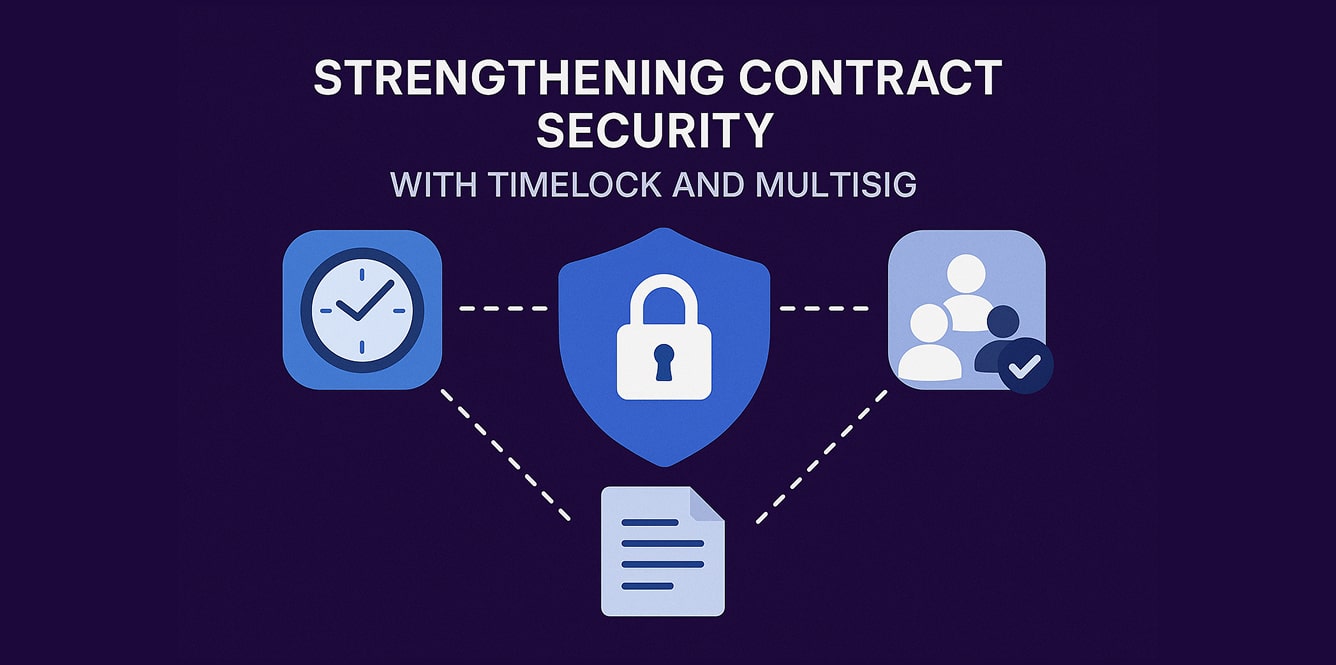
    Strengthening Contract Security with Timelock and Multisig

    At Synergetics, security and transparency are at the core of our smart contract deployment strategy. As part of our ongoing commitment to protecting the integrity of our ecosystem and the trust of our community, we’ve taken proactive measures to mitigate administrative risks related to proxy contract management on the Polygon network.

    Following industry best practices and recommendations from our recent security audit, we have implemented a layered security approach combining a Time-Lock Controller and a Multi-Signature Wallet (2-of-3 threshold) to manage sensitive administrative actions. This safeguards against single points of failure and ensures the community has visibility on future upgrades.

    Why Combine Timelock and Multisig?

    Smart contract proxies allow for flexible upgrades, but without proper controls, the admin privileges can become a vulnerability. A private key compromise or human error could lead to catastrophic misuse of contract admin rights.

    To prevent this, we adopted a two-pronged strategy:

    1. Time-Lock Contract — Introduces a delay before privileged actions can be executed.

    2. Multi-Signature Wallet — Ensures that no single individual has unilateral control.

    This combination offers both technical and procedural safety:

    • The Time-Lock gives the community a minimum of 48 hours’ notice for any privileged operation.
    • The Multi-Signature Wallet (2-of-3) ensures that even if one private key is compromised, malicious actions cannot be executed without consensus.

    Timelock Contract Details

    We’ve deployed a standard, audited TimelockController contract on the Polygon network.

    • Timelock Contract Address:
      0x469f8Adb9ffAcDf7d5F3dD9a73be3154B90d689c

    The contract enforces a minimum delay of 48 hours before executing sensitive administrative actions, providing transparency and time for the community to review and raise concerns.


    Multi-Signature Wallet Setup

    All admin-level privileges have been assigned to a multi-signature wallet, reducing the risk of single-key compromise.

    • MultiSig Wallet Address:
      matic: 0x28694A5F7B670586c4Fb113d7F52B070B86f0FFe
      Threshold: 2 of 3 Signers Required

    Signer Addresses:

    • Signer 1: matic:0xdFdf1Da1f20498a9197e9Ba9a9f1D52b82e29Ea4
    • Signer 2: matic:0xE334a549DB2aB696715fA990eC6DB1Bf63F97644
    • Signer 3: matic:0xD3C646cB648d3DB8e36A476A117667a24Cd9be59

    The combination of the time-lock and this multisig setup ensures that sensitive actions can only proceed after:

    1. Community visibility and time for feedback.

    2. Approval by at least two trusted signers.


    Transparent Governance via Defender

    We use OpenZeppelin Defender to manage the approval and execution workflow for administrative tasks. This enables:

    • Clear proposal tracking.
    • Secure approval process via multisig.
    • Public visibility of contract upgrades and administrative actions.

    Our Pledge to the Community

    Security is a moving target, and so is trust. Whenever we plan to upgrade or migrate to a new implementation contract, we commit to notifying the community in advance and providing sufficient notice via our communication channels.

    We believe this approach not only meets but exceeds the baseline expectations for responsible contract management.We encourage our community to monitor the Timelock and Multisig addresses and reach out with any questions or suggestions for further improving our governance framework.

    Enhancing AI Agent Communication Effectively

    Introduction

    Communication between AI agents is like the conversation between two friends trying to solve a problem together. It needs to be smooth and clear. If there’s misunderstanding, things can go wrong quickly. Imagine asking your friend to pass the salt and getting pepper instead. That’s a small mix-up, but in AI, a communication error might be more problematic. When AI agents can’t communicate well, it can affect their tasks, which is why it’s so important to get it right from the start.

    Many people find the idea of AI agents a bit confusing, but it’s not so different from humans talking to each other. Understanding some of the bumps along the road can help us appreciate the need for better solutions. AI agents can face hiccups in communicating, and that’s something many of us may not realize happens behind the scenes. By tackling these issues, we can improve how AI systems work together, helping to get better outcomes and solutions for those who rely on this technology.

    Identifying Common Communication Issues

    AI agents, much like people, can stumble upon communication roadblocks. These hiccups can revolve around misunderstandings, where one agent misinterprets the signals or data from another. It’s similar to when someone asks for directions, but the person giving the directions is unfamiliar with the landmarks being referred to. This kind of misunderstanding is quite common in the AI world.

    Here are some typical problems AI agents might encounter:

    • Signal Interference: Just like a dropped call, AI agents can face interruptions in data exchange that cause a break in communication.
    • Data Misinterpretation: When one agent sends information, but it’s read incorrectly by another, leading to wrong conclusions or actions.
    • Protocol Mismatches: When different systems or applications use communication methods that don’t align or connect correctly.

    Imagine two AI agents trying to coordinate on a task: one sends instructions, but the other misreads them. This results in actions that are out of sync with what was needed. These kinds of issues point to the importance of protocols and clear channels in AI communication. Recognizing these problems is the first step to improving how AI systems work together. Understanding the typical hurdles these agents encounter gives us a foundation for building better solutions to enhance their communication capabilities.

    Solutions to Enhance Communication

    To tackle the communication issues outlined earlier, it’s great to have some concrete solutions at hand. One key strategy is ensuring that AI agents follow well-defined protocols. Imagine this: protocols serve as guidelines, much like a map that helps navigate complex terrains. They set the rules on how data is packaged, shared, and interpreted. When protocols align with each other, they prevent those frustrating misunderstandings.

    Another helpful approach is implementing secure communication channels. These channels ensure that messages pass safely and directly between agents without interference. Secure channels act like guarded paths, ensuring that no harmful interruptions disrupt the interaction between the agents.

    Let’s not forget the importance of regular updates. Just as you would update your phone apps, updating AI software ensures they’re always equipped with the latest fixes and improvements, making communication smoother and more efficient. Keeping systems up-to-date helps in adapting to new patterns and solving previous glitches.

    Tools and Technologies

    Today, there is a wide array of tools designed to smooth out communication between AI agents. These tools offer various features, from user-friendly interfaces to advanced data processing capabilities, making them incredibly versatile. Let’s dive into some typical elements:

    – User-Friendly Platforms: Some tools are designed with usability in mind, so anyone can configure and manage them without needing a tech wizard.

    – Integration Features: These features allow different AI systems to connect seamlessly, facilitating a more cohesive communication flow.

    – Advanced Security: Ensuring the exchanged data remains safe from unauthorized access is a priority. Tools with strong security measures preserve the integrity of the communications.

    Selecting the right tool for your specific needs can make all the difference in how efficiently agents communicate. The choice often boils down to the system’s compatibility and the ease of integration into existing structures.

    Implementing Best Practices

    Using best practices is the best bet for maintaining an efficient communication environment for AI agents. Start by regularly monitoring communication pathways. This involves checking if the data is flowing smoothly and identifying any points of failure. Routine monitoring acts like a health check-up for your system, catching anything wrong before it becomes a bigger issue.

    Consider setting up feedback loops. Feedback helps developers identify what is working and what isn’t, allowing them to refine and adapt protocols as necessary. Consistent reviews and tweaks keep the system aligned with the ever-changing demands.

    Ultimately, collaboration is another critical aspect. Involve specialists who understand the nuances of AI communication. They can offer unique insights and tailored solutions to help your system remain robust and reliable over time.

    Takeaway Thoughts

    Clear, reliable communication among AI agents isn’t just a technical goal; it’s a necessity for any system relying on AI to deliver consistent results. By understanding typical problems and exploring viable solutions, you can ensure your AI agents communicate as effectively as possible.

    Take these insights and think about how they fit into your operations. Addressing these challenges can lead to smoother workflows, more effective interactions between systems, and ultimately, better outcomes for your projects. Confidently tackling these points helps create a future where AI systems work together seamlessly, benefiting businesses and users alike.
    Ensuring seamless communication between AI agents requires strategic methods and the right tools. If you’re aiming to improve how your AI systems interact, Synergetics.ai offers solutions tailored to create effective communication pathways. Explore how our innovative strategies can make a difference in your AI-driven projects. Learn more about communication between an AI agent and another and see how you can elevate your system’s performance.

    .TWIN: The First AI Agent with a Wallet

    As AI and blockchain converge, the need for trusted, interoperable infrastructure becomes critical. That’s why we’re proud to introduce .TWIN domains — a next-generation domain system that empowers autonomous agents with a secure identity and wallet, built for seamless interaction within decentralized ecosystems.

    Developed in partnership with Synergetics.ai — a pioneer in autonomous AI systems a participant in MIT Media Lab’s Decentralized AI Initiative — .TWIN domains unlock agent-to-agent communication through Synergetics’ patented AgentTalk Protocol. This protocol enables decentralized, cross-platform messaging with embedded trust and verification, laying the groundwork for scalable AI automation across industries.

    Every .TWIN domain functions as both a wallet and identity layer for AI agents, redefining how they identify, communicate, and transact onchain.

    And while .TWIN domains are designed for AI agents, they’re open to everyone. Whether you’re a builder, a collector, or just getting started in Web3, you can claim a .TWIN to simplify crypto payments, build your onchain identity, and tap into the future of AI-native interactions.

    Why Choose .TWIN Domains?

    1. AI Agent Wallets

    AI agents can now own wallets and verified identities through .TWIN domains, enabling secure transactions and collaborations across onchain platforms with full autonomy.

    2. Simplify Crypto Payments

    .TWIN domains replace long, complex wallet addresses with a human-readable name, making crypto payments faster and more efficient, both for personal transactions and across onchain platforms.

    3. Login with Unstoppable

    Use your .TWIN domain to securely log into hundreds of onchain apps, including DeFi, gaming, and other onchain systems. No passwords required — just a trusted onchain identity for easy, seamless access.

    Unlock More Features with Your .TWIN Domain

    Your .TWIN domain also unlocks:

    • Build your onchain reputation with a trusted, verifiable UD.me profile and network with others.
    • Build your own onchain website powered by IPFS, establishing on onchain, a permanent presence.
    • And much more, with full control over your onchain identity.

    Your Onchain Experience Starts Here with .TWIN

    Whether you’re part of the AI ecosystem or a regular user looking to simplify your crypto payments and build your onchain identity, .TWIN domains provide the tools you need to navigate the onchain world with ease and security.

    Claim your .TWIN domain today and join the future of secure, autonomous AI transactions and simplified crypto payments.


    Raghu Bala is Founder of Synergetics.ai , an AI startup, based in Orange County, California.  He is an experienced technology entrepreneur and is an alumnus of Yahoo, Infospace, Automotive.com, PwC, and has had 4 successful startup exits.

    Mr. Bala possesses an MBA in Finance from the Wharton School (University of Pennsylvania), an MS in Computer Science from Rensselaer Polytechnic Institute and a BA/BS in Math and Computer Science from the State University of New York at Buffalo.  He is the Head Managing Instructor at 2U and facilitates participants through MIT Sloan courses in Artificial Intelligence, Decentralized Finance and Blockchain.  He is also an Adjunct Professor at VIT (India), and an ex-Adjunct Lecturer at Columbia University, and a Deeptech Mentor at IIT Madras(India).

     He is a published author of books on technical topics and is a frequent contributor online for the last two decades.  His latest books include – co-author of “Handbook on Blockchain” for Springer-Verlag publications, and a Contributing Editor of “Step into the Metaverse” from John Wiley Press, and various technical articles on Medium.com.    

    Mr Bala has spoken at several major conferences worldwide including IEEE Smartcomp – Blockchain Panel (Helsinki),  Asian Financial Forum in Hong Kong, Global Foreign Direct Investment Conference in Sydney (Australia) and Huzhou (China), Blockchain Malaysia, IoT India Congress, Google IO, and several more.  He is also served as a Board member of AIM – The global industry association that connects, standardizes and advances automatic identification technologies.

    His current areas of focus include Product Development, Engineering and Strategy in the startups related to Agentic AI, Autonomous Agents, Generative AI, IoT, Artificial Intelligence, and the Metaverse.  His industrial domain knowledge spans Automotive, Retail, Supply Chain & Logistics, Healthcare, Insurance, Mobile & Wireless, and more.

    Synergetics
    Privacy Overview

    This website uses cookies so that we can provide you with the best user experience possible. Cookie information is stored in your browser and performs functions such as recognising you when you return to our website and helping our team to understand which sections of the website you find most interesting and useful.